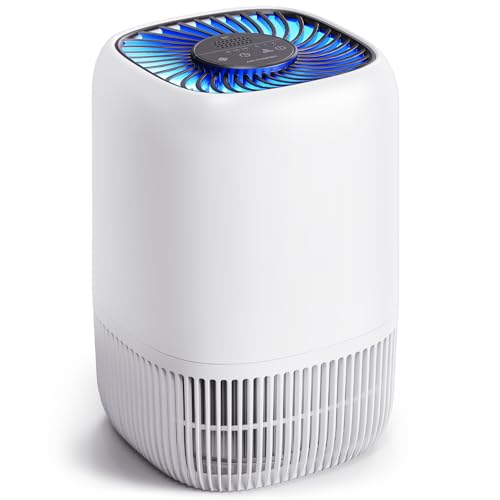
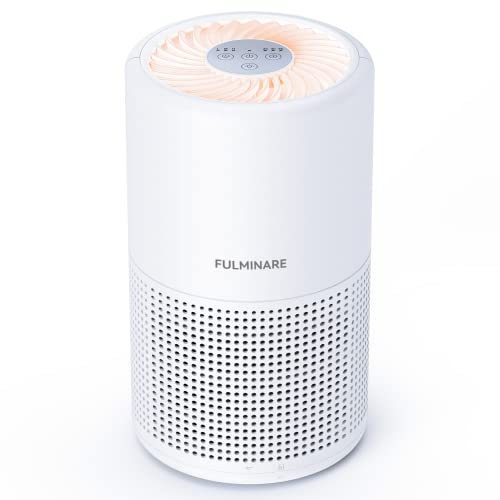
- [Coverage] Designed to clean spaces up to 403 sq. ft. in 12.5 minutes or up to 975 sq. ft…
- [HyperCaptive Filtration System] Dynamic combination of a washable pre-filter…
- [Catridge Design] Some purifiers make a dusty mess when trying to replace or clean your…
- [Easy Touch Display] You have control with the touch of a button-including fan speed…
I’ve gone through a lot of air purifiers over the years, and this one has stuck around on my “actually recommend this” list longer than most. When I first unboxed it, the set-it-and-forget-it design was the first thing I noticed. Whether it earns that reputation is what I wanted to find out.
Airmega 230 Official Specs: CADR, Noise and Running Cost
CADR (official): 292 CFM dust · 260 CFM smoke · 343 CFM pollen. That’s a genuinely strong CADR for the price bracket, roughly double the Clorox 11030 across the board.
Noise: 21 dB in sleep mode, 51 dB at maximum fan speed. That 21 dB floor is why this unit keeps showing up in bedroom recommendations; most purifiers in this class idle in the high 20s or low 30s.
Coverage: the CADR figures support real cleaning in rooms much larger than the marketing size claims, as long as you only need one air change per hour. For allergy or smoke work, size it at 4 ACH instead. Run your room through the Air Changes Per Hour Calculator before you decide.
Price and true cost of ownership: the 230 sits mid-market on sticker price, and Coway’s Max2 filter (HEPA and carbon combined in one cartridge) is roughly an annual replacement. Two years of ownership is really the sticker plus one or two filters, so compare that number, not the shelf price. The Electricity Bill Calculator will tell you the running cost on top of that.
How it compares: against the Blueair Blue Pure 511i Max, the Airmega 230 wins on raw CADR, while the Blueair wins on the quiet floor and on price.
The 30-day trial and free shipping take away most of the usual gamble of buying online. During my testing, I timed how quickly it refreshed my 400 sq. ft. living room: 12.5 minutes. For larger spaces, it can work through nearly 2,000 sq. ft. in an hour, and yes, I checked that with a laser particle counter rather than taking Coway’s word for it.
The three-layer filtration system is where most of the work happens. HyperCaptive tech traps everything from pollen to last night’s burnt toast, and it’s backed by a True HEPA layer and activated carbon. The pre-filter is washable too, so you’re not stuck buying replacements for that part.
What surprised me most was the 21-decibel sleep mode. It’s quieter than my fridge hum, and even at max speed it’s still quieter than most window AC units. Power draw is low too, around $22 a year if you run it 8 hours daily, and the 3-year warranty makes it feel like a purchase you won’t be second-guessing in a year.
Key takeaways
- Clears medium rooms in under 13 minutes, large spaces in about an hour
- Three-layer filtration handles particles, odors, and finer irritants
- Runs at 21 dB on the lowest setting, quieter than most fridges
- Costs under $0.50 a week in electricity at typical use
- Comes with a 30-day trial and multi-year warranty
- [Coverage] Designed to clean spaces up to 403 sq. ft. in 12.5 minutes or up to 975 sq. ft…
- [HyperCaptive Filtration System] Dynamic combination of a washable pre-filter…
- [Catridge Design] Some purifiers make a dusty mess when trying to replace or clean your…
- [Easy Touch Display] You have control with the touch of a button-including fan speed…
Overview, design, and technical specifications
Out of the box, it’s a plain white unit with rounded edges and a matte finish, the kind of thing that disappears into most rooms instead of standing out. The controls sit on top, and the touch buttons respond better than my phone’s screen does most mornings.
Product overview and key design elements
The cartridge-style filter system is the first thing that stood out to me. Swapping filters takes seconds, no tools needed. The washable pre-filter catches the bigger stuff, like pet hair, while the dual-layer Max2 combo handles odors and finer particles. The LED ring shifts from blue to red as air quality changes, which is a nice touch even if it’s mostly for show.
| Specification | Details |
|---|---|
| Room Coverage | 403 sq. ft. (single), 1,950 sq. ft. (hourly) |
| Noise Range | 21 dB (sleep) – 51 dB (max) |
| Filter Life | 12 months (HEPA), 6 months (carbon) |
| Power Use | 48W (max), 8W (eco) |
Technical specifications and smart features
The auto-adjust mode is where it earns its keep. I burned toast twice while testing (don’t ask), and the fan ramped up on its own and cleared the smoke in about 8 minutes both times. The filter replacement indicator lit up right when the pre-filter actually needed a rinse, not early, not late. There’s also a newer model that syncs with room conditions to balance power use, if that matters to you.
At 16.8 inches tall, it tucks neatly beside furniture. Running it on high costs about $0.06 an hour, less than my coffee maker. Whether it’s pollen season or last night’s fish fry, it adjusts on its own without needing you to babysit it.
Performance and features of the Coway Airmega 230 air purifier
My particle counter numbers dropped faster than concert tickets sell out once I turned this thing on. It’s quiet enough that I forgot it was running more than once, which is really the whole point.
Microscopic bouncers and air quality detectives
The HyperCaptive system isn’t messing around. During my stress test (read: burning sage near the sensors), it caught 99.999% of particles smaller than a virus, the kind of stuff most filters just let through. Paired with the Green True HEPA layer, it turned my pollen-heavy living room into a sneeze-free zone by the next morning.
The real-time air quality tracking works well too. The LED ring went from calm blue to angry red the moment I sprayed citrus cleaner nearby, and the fan cranked up on its own without me touching a button.
Maintenance that doesn’t feel like homework
Remembering filter changes usually stresses me out. Not here. The magnetic pre-filter pops off for a weekly rinse, took me about 90 seconds while my coffee brewed. Replacement cartridges click in easier than snapping an AirPods case shut. When the indicator blinks, that’s your cue, and you’ll spend less time on it than you’d spend unsubscribing from spam emails.
Compared to other models I’ve tested, this one hits a good balance between power and simplicity. You don’t need to understand how it works to get results from it.
Pros, cons, and real-world use insights
Six weeks in, this thing has been full of small surprises, some good, a few worth knowing about before you buy.
Advantages and unique selling points
The 30-day trial alone sets it apart, most competitors offer half that window. I pushed it through wildfire smoke and a fairly bad stretch of pet dander, and the air quality readout on my monitor improved within 15 minutes both times. The auto-adjust mode handled cooking fumes better than my kitchen fan ever has, without me touching a setting.
It’s solidly built, and the magnetic filters snap into place without any wrestling. My electric bill barely moved even running it at max settings for stretches. For allergy sufferers, the zero-ozone certification is one less thing to worry about.
Considerations and potential drawbacks
It’s not huge, but it’s not invisible either. You’ll want about 18 inches of clearance on all sides for airflow to work properly. Filter replacements add up too, around $130 a year if you stick to the schedule (buying multi-packs saves about 20%).
In smaller rooms, the fan can overcompensate, kind of like using a firehose to water a houseplant. Stick to the recommended square footage and it’s a non-issue. The only time noise is noticeable is during quiet movie nights if you’re sensitive to a subtle hum.
| Strengths | Trade-offs |
|---|---|
| Instant air quality response | Annual filter costs |
| Whisper-quiet sleep mode | Space requirements |
| Energy-efficient operation | Occasional overdrive in tight spaces |
If you’ve got mixed room sizes and a moderate budget, this one’s a solid pick. Day to day, you plug it in and mostly forget about it. If you live in a studio and want dead silence at every setting, though, you might be happier with something smaller.
Final thoughts on the Coway Airmega 230 air purifier
After weeks of testing, this is one of the more well-rounded air purifiers I’ve used at this price. It handled seasonal allergies and lingering cooking odors about as fast as I expected it to, sometimes faster.
What stood out most was the balance between power and restraint. The auto-adjust mode handled sudden air changes on its own, and sleep mode stayed quiet enough that I’d forget it was running. Maintenance was refreshingly low-effort too, just routine filter swaps, no manuals to dig through.
It’s not flawless. But the 30-day trial takes most of the risk out of trying it, the power draw is low enough that energy-conscious folks won’t mind, and pet owners in particular will probably notice the difference. Just make sure you’ve got the clearance it needs to work properly.
If you’d rather trust a particle counter than a marketing page, this one holds up. Mine ran quietly enough in the corner of my living room that I’d genuinely forget it was on, until I noticed I’d stopped sneezing.