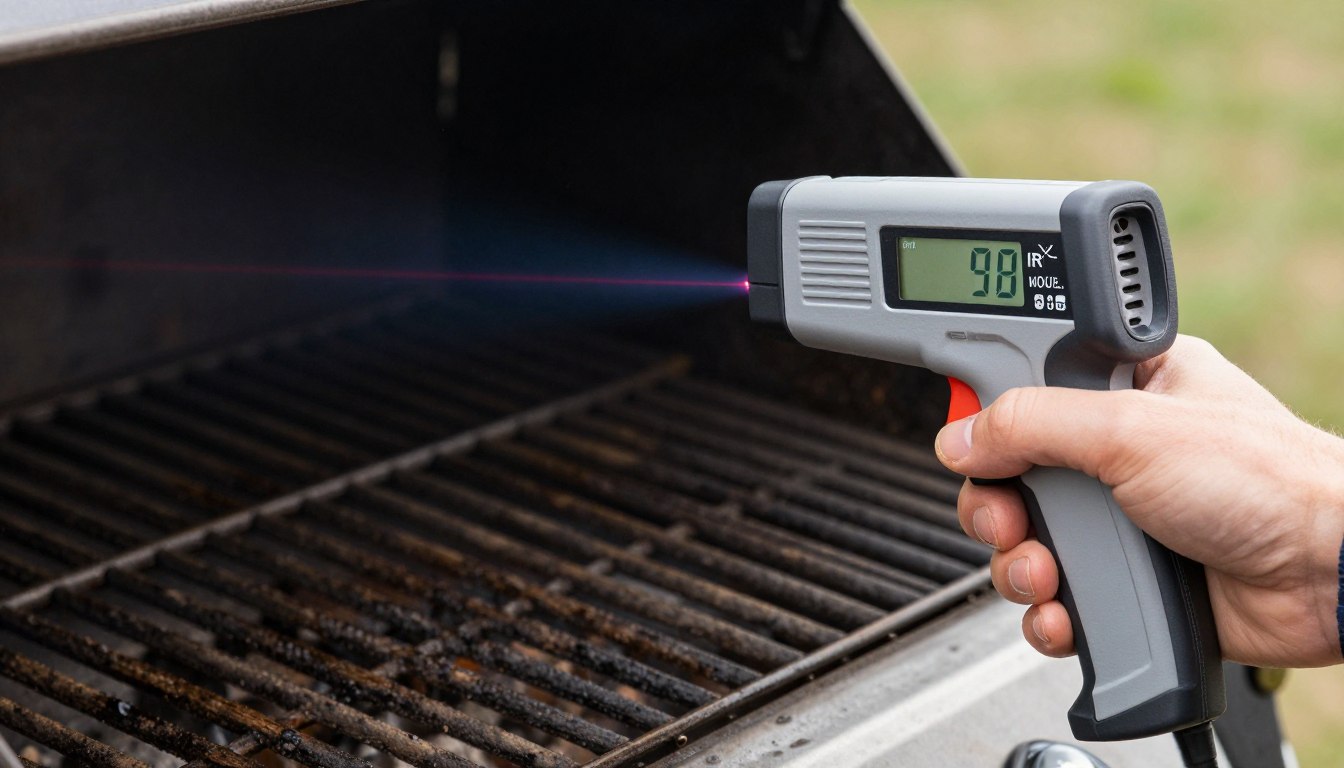
Following thorough testing and research, we have discovered the top infrared thermometers that are both user-friendly and affordable. This guide overviews everything you need to know about versatile tools and discusses the 5 best ones, which are ideal for home cooks, DIYs and professionals.
How to Use an Infrared Thermometer
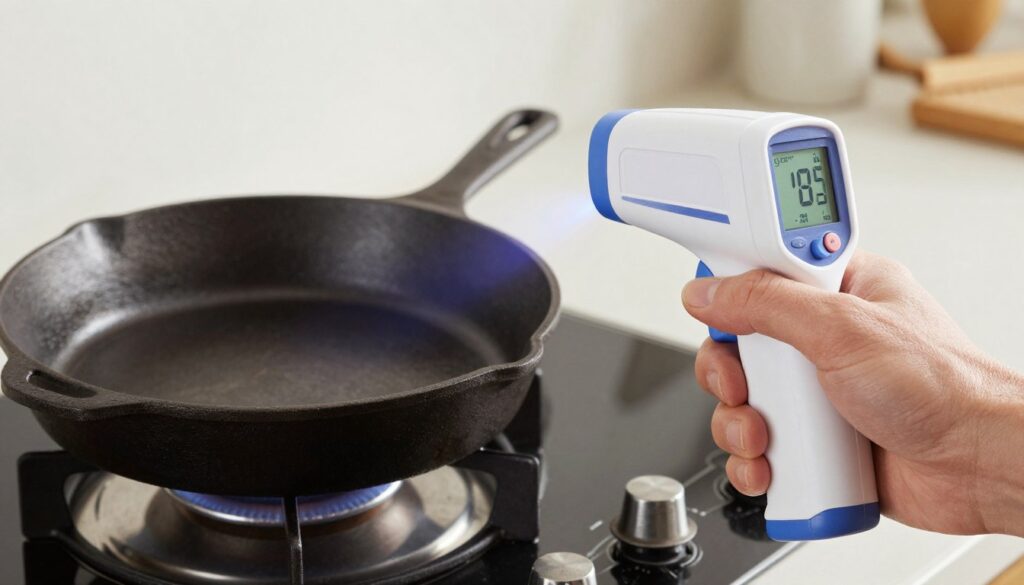
Proper technique for measuring surface temperature with an infrared thermometer
Using an infrared thermometer correctly ensures you get the most accurate readings possible. Follow these simple steps:
- Hold the thermometer by its handle and point it at the target surface.
- Position yourself at the optimal distance based on your thermometer’s distance-to-spot (D:S) ratio. For a 12:1 ratio, stand 12 inches away to measure a 1-inch spot.
- Press and hold the trigger. A laser dot or pattern will appear, showing where you’re measuring.
- Keep the thermometer perpendicular to the surface for the most accurate reading.
- The temperature will appear on the digital display almost instantly.
- Release the trigger. Most models will hold the last reading for a few seconds.
Tips for Accurate Readings
Do’s
- Ensure the surface is clean and free from steam, dust, or smoke.
- Adjust the emissivity setting if your thermometer allows it (typically 0.95 for most non-metallic surfaces).
- Take multiple readings for critical measurements.
- Consider the size of the area being measured relative to your distance.
Don’ts
- Don’t measure through glass, liquids, or transparent surfaces.
- Don’t use on highly reflective surfaces without adjusting emissivity.
- Don’t expect accurate internal temperature readings (use a probe thermometer instead).
- Don’t hold the thermometer at an angle to the surface.
Remember: Infrared thermometers measure surface temperature only. For internal food temperatures (like meat doneness), you’ll need a probe thermometer.
Key Things to Know Before Buying an Infrared Thermometer
Understanding the technical specifications and features will help you select the best infrared thermometer for your specific needs. Here are the critical factors to consider:
Temperature Range
Different models offer varying temperature ranges. For cooking and household use, a range of -50°F to 750°F is typically sufficient. Professional applications like checking HVAC systems or automotive diagnostics may require ranges up to 1000°F or higher.
Accuracy
Accuracy is usually expressed as a percentage or fixed value (e.g., ±2% or ±2°F). Higher-end models offer better accuracy, which is crucial for precise applications. Most quality infrared thermometers have an accuracy of ±2°F or ±2% of the reading, whichever is greater.
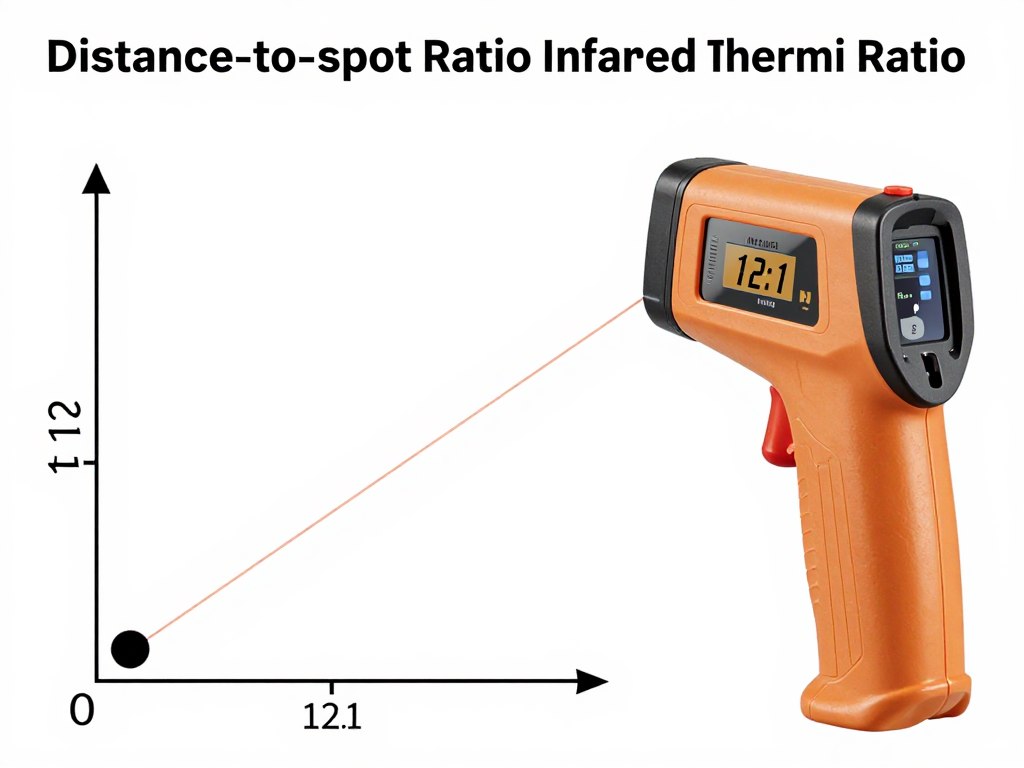
Distance-to-spot ratio visualization: how measurement area changes with distance
Distance-to-Spot (D:S) Ratio
This ratio indicates how focused the measurement beam is. A 12:1 ratio means that at 12 inches away, the thermometer measures a 1-inch diameter spot. Higher ratios (like 30:1) allow for more precise measurements from greater distances, which is valuable when measuring hot or hard-to-reach surfaces.
Emissivity Settings
Emissivity refers to how effectively a surface emits thermal radiation. Different materials have different emissivity values. Basic models have fixed emissivity (typically 0.95), while advanced models allow adjustable settings for more accurate readings on various surfaces, especially metals and shiny objects.
Response Time
Most quality infrared thermometers provide readings in under a second. Faster response times are beneficial when you need quick measurements or are scanning multiple areas.
Laser Types
Single-point lasers show the approximate center of the measurement area. Dual-laser or circular laser systems provide a better visualization of the actual measurement area, improving accuracy and ease of use.
Display Features
Look for backlit displays for visibility in low-light conditions. Some models offer additional display features like maximum/minimum readings, average calculations, or high/low temperature alarms.
Durability
Consider the build quality, especially if you’ll be using the thermometer in demanding environments. Some models offer rubberized coatings for impact resistance or IP ratings for dust and water resistance.
Pro Tip: For most home cooking applications, a thermometer with a 12:1 D:S ratio, temperature range up to 750°F, and adjustable emissivity will provide excellent performance without breaking the bank.
Comparison of the Best Infrared Thermometers
| Product | Temperature Range | Accuracy | D:S Ratio | Emissivity | Response Time | Our Rating |
| ThermoWorks Industrial IR Gun | -76° to 1022°F | ±2.7°F or ±2% | 12:1 | Adjustable (0.1-1.0) | 1 second | 4.8/5 |
| Etekcity Lasergrip 800 | -58° to 716°F | ±2% or ±3.6°F | 16:1 | Fixed (0.95) | 0.5 seconds | 4.5/5 |
| Klein Tools IR1 | -4° to 752°F | ±2% or ±4°F | 10:1 | Fixed (0.95) | 0.5 seconds | 4.3/5 |
| Wintact Infrared Thermometer | -58° to 986°F | ±2.7°F or ±1.5% | 12:1 | Dual (0.8/0.95) | 0.5 seconds | 4.2/5 |
| ThermoWorks Hi-Temp IR | -76° to 1400°F | ±4°F or ±2% | 30:1 | Adjustable (0.1-1.0) | 1 second | 4.9/5 |
The 5 Best Infrared Thermometers of 2026
1. ThermoWorks Industrial IR Gun (IR-GUN-S)
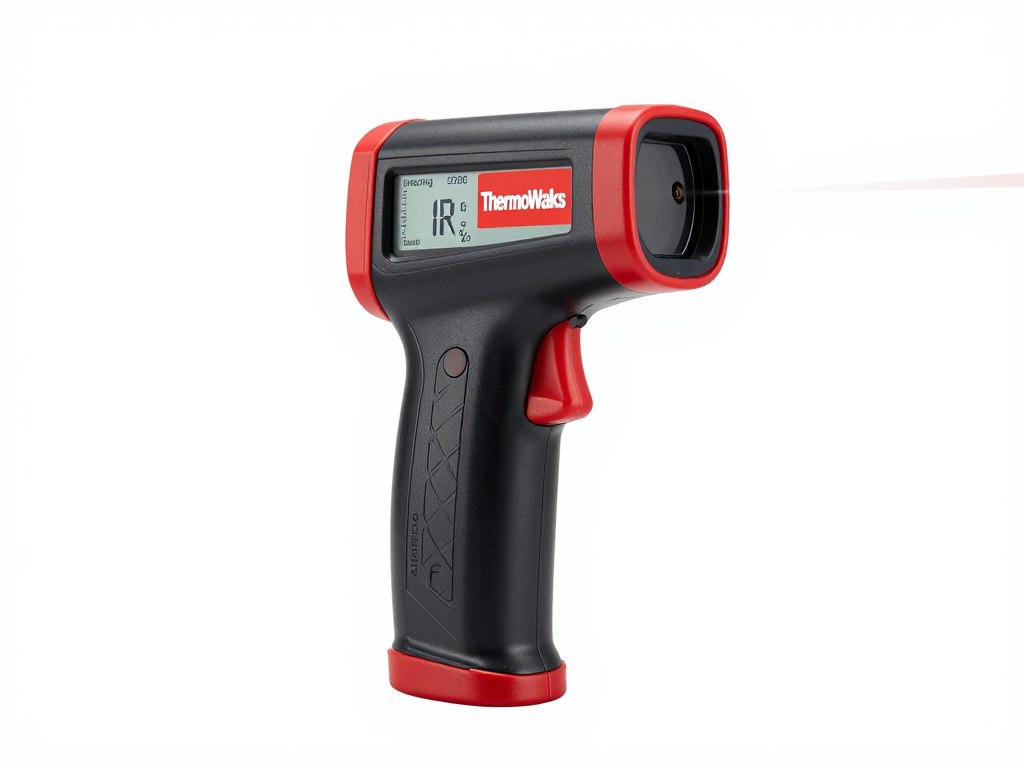
The ThermoWorks Industrial IR Gun consistently delivers exceptional performance across various applications, making it our top pick and Editor’s Choice for 2026. This professional-grade thermometer combines precision, versatility, and user-friendly features at a reasonable price point.
What sets this model apart is its impressive accuracy (±2.7°F from 55 to 95°F) and wide temperature range (-76 to 1022°F). The fully adjustable emissivity settings (0.1 to 1.0) allow for accurate readings on virtually any surface, from shiny metals to matte cookware.
Specifications
- Temperature Range: -76° to 1022°F (-60° to 550°C)
- Accuracy: ±2.7°F from 55 to 95°F, ±4°F or ±2% above 32°F
- Distance-to-Spot Ratio: 12:1
- Emissivity: Adjustable from 0.1 to 1.0 in 0.01 increments
- Response Time: 1 second
- Display: Backlit LCD with multiple measurement modes
- Additional Features: Max/min/avg readings, high/low alarms, continuous measurement
Pros
- Exceptional accuracy across a wide temperature range
- Fully adjustable emissivity for various surfaces
- Multiple measurement modes (max/min/avg/difference)
- High-quality construction and durable design
- Intuitive interface with easy-to-navigate buttons
Cons
- Single laser point (rather than circular) makes targeting less intuitive
- Slightly higher price point than basic models
- Laser can be difficult to see in bright sunlight
2. Etekcity Lasergrip 800 Infrared Thermometer
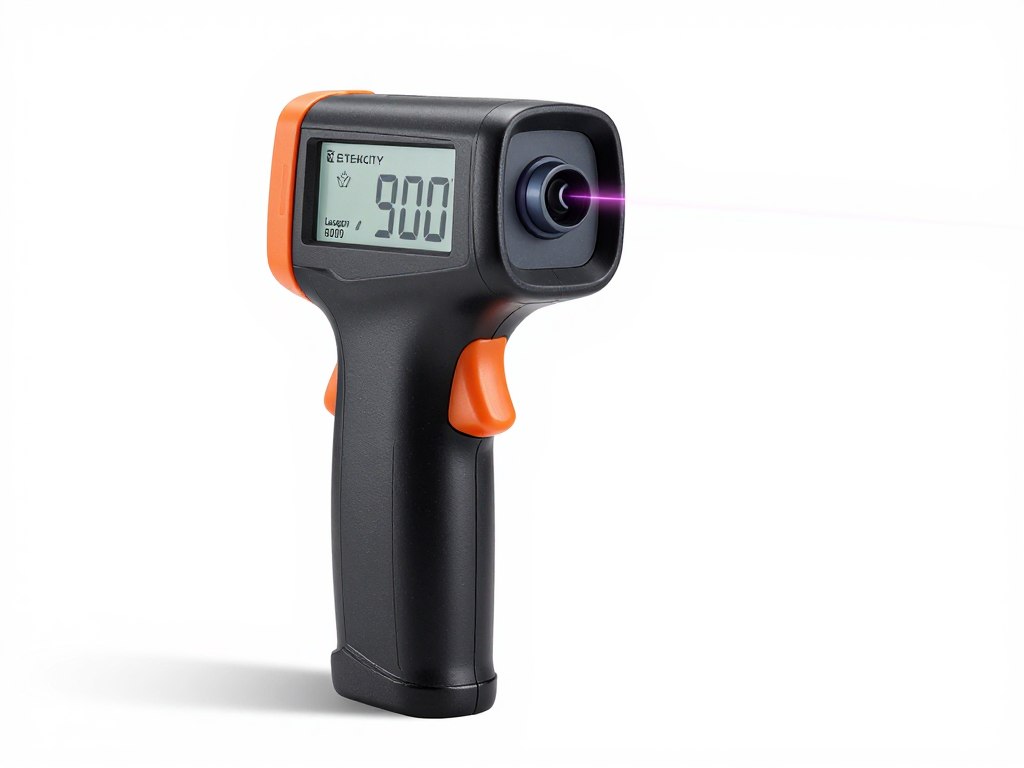
The Etekcity Lasergrip 800 offers impressive performance at an affordable price point, making it our best value pick. This user-friendly thermometer delivers reliable readings for most household and cooking applications without breaking the bank.
With a 16:1 distance-to-spot ratio (better than many competitors in its price range), the Lasergrip 800 allows for accurate measurements from a safer distance. While it lacks adjustable emissivity, its fixed 0.95 setting works well for most non-metallic surfaces, including food, water, and wood.
Specifications
- Temperature Range: -58° to 716°F (-50° to 380°C)
- Accuracy: ±2% or ±3.6°F (±2°C)
- Distance-to-Spot Ratio: 16:1
- Emissivity: Fixed at 0.95
- Response Time: 0.5 seconds
- Display: Backlit LCD
- Additional Features: Auto-off function, low battery indicator
Pros
- Excellent value for money
- Better-than-average 16:1 distance-to-spot ratio
- Fast 0.5-second response time
- Simple, intuitive operation
- Bright, easy-to-read backlit display
Cons
- No adjustable emissivity settings
- Limited temperature range compared to premium models
- Lacks advanced measurement modes
- Battery compartment door can feel loose
3. ThermoWorks Hi-Temp Industrial IR with Circle Laser
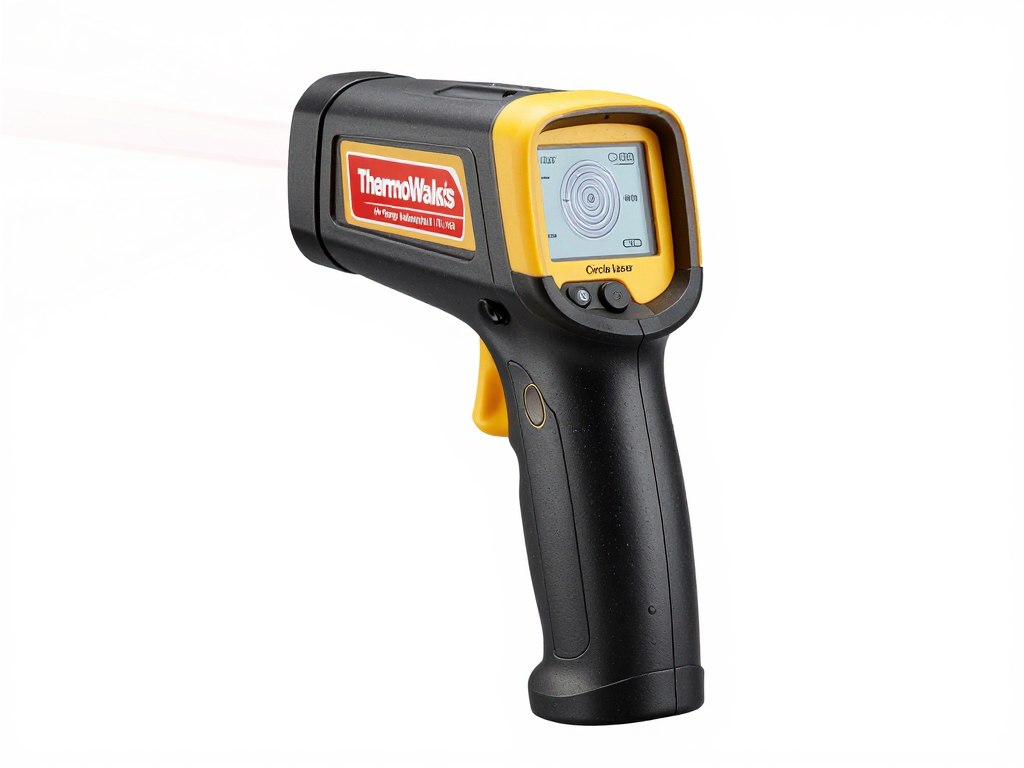
For professionals and serious enthusiasts who demand the highest level of precision, the ThermoWorks Hi-Temp Industrial IR with Circle Laser represents the gold standard in infrared thermometry. Its standout feature is the innovative circular laser system that clearly outlines the exact measurement area, eliminating guesswork.
With an impressive 30:1 distance-to-spot ratio, this thermometer can take precise readings from much greater distances than standard models. It also boasts the widest temperature range in our lineup (-76° to 1400°F), making it suitable for everything from freezer checks to pizza oven monitoring.
Specifications
- Temperature Range: -76° to 1400°F (-60° to 760°C)
- Accuracy: ±4°F or ±2% above 32°F, ±1.8°F from 59° to 95°F
- Distance-to-Spot Ratio: 30:1
- Emissivity: Adjustable from 0.1 to 1.0 in 0.01 increments
- Response Time: 1 second
- Display: Backlit LCD with multiple measurement modes
- Additional Features: Circle laser targeting, max/min/avg/difference readings, high/low alarms, compatible with external type K probes
Pros
- Circular laser clearly shows the exact measurement area
- Superior 30:1 distance-to-spot ratio for precision from greater distances
- Widest temperature range (-76° to 1400°F)
- Compatible with external type K probes for contact measurements
- Professional-grade build quality and durability
Cons
- Highest price point in our lineup
- May have more features than casual users need
- Slightly heavier than other models
4. Klein Tools IR1 Infrared Thermometer
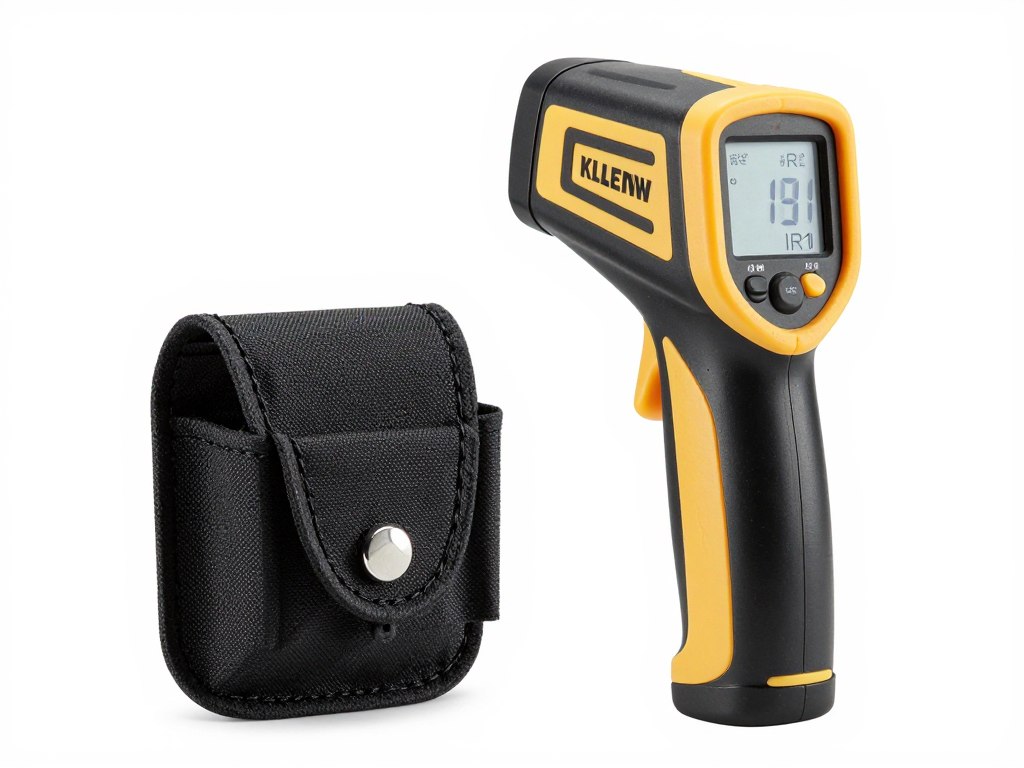
The Klein Tools IR1 stands out for its exceptional build quality and durability. Designed with tradespeople in mind, this rugged thermometer can withstand the rigors of job sites and workshop environments while delivering reliable performance.
What makes the IR1 special is its industrial-grade construction and included holster, which provides both protection and convenient access. While it doesn’t offer the advanced features of some competitors, it excels at its core function: providing accurate temperature readings in demanding conditions.
Specifications
- Temperature Range: -4° to 752°F (-20° to 400°C)
- Accuracy: ±2% or ±4°F (±2°C)
- Distance-to-Spot Ratio: 10:1
- Emissivity: Fixed at 0.95
- Response Time: 0.5 seconds
- Display: Backlit LCD
- Additional Features: Includes protective holster, auto-off function
Pros
- Exceptional durability and build quality
- Includes protective holster with belt clip
- Bright, easy-to-read display
- Good accuracy for high-temperature readings
- Reliable performance in harsh environments
Cons
- Lower 10:1 distance-to-spot ratio
- No adjustable emissivity
- Limited temperature range compared to premium models
- Requires a screwdriver to access battery compartment and unit switch
5. Wintact Infrared Thermometer

The Wintact Infrared Thermometer proves that accuracy doesn’t have to come with a hefty price tag. This budget-friendly option delivers surprisingly precise readings and offers features typically found in more expensive models, making it an excellent choice for occasional users or those on a tight budget.
What sets the Wintact apart from other budget options is its self-calibration feature, which allows users to fine-tune measurements by up to ±9°F if needed. It also offers dual emissivity settings (0.8 and 0.95), providing better versatility than many fixed-emissivity competitors in its price range.
Specifications
- Temperature Range: -58° to 986°F (-50° to 530°C)
- Accuracy: ±2.7°F or ±1.5% above 32°F, ±5°F below 32°F
- Distance-to-Spot Ratio: 12:1
- Emissivity: Dual settings (0.8 and 0.95)
- Response Time: 0.5 seconds
- Display: Backlit LCD
- Additional Features: Self-calibration mode, max/min readings, auto-off function
Pros
- Excellent value for money
- Surprisingly accurate readings for its price point
- Self-calibration feature for fine-tuning
- Dual emissivity settings (0.8 and 0.95)
- Wide temperature range for a budget model
Cons
- Audible beep after each reading can’t be disabled
- Single laser point makes targeting less intuitive
- Build quality feels less premium than higher-end models
- Max/min modes must be accessed while trigger is held
Why the ThermoWorks Industrial IR Gun is Our Editor’s Choice
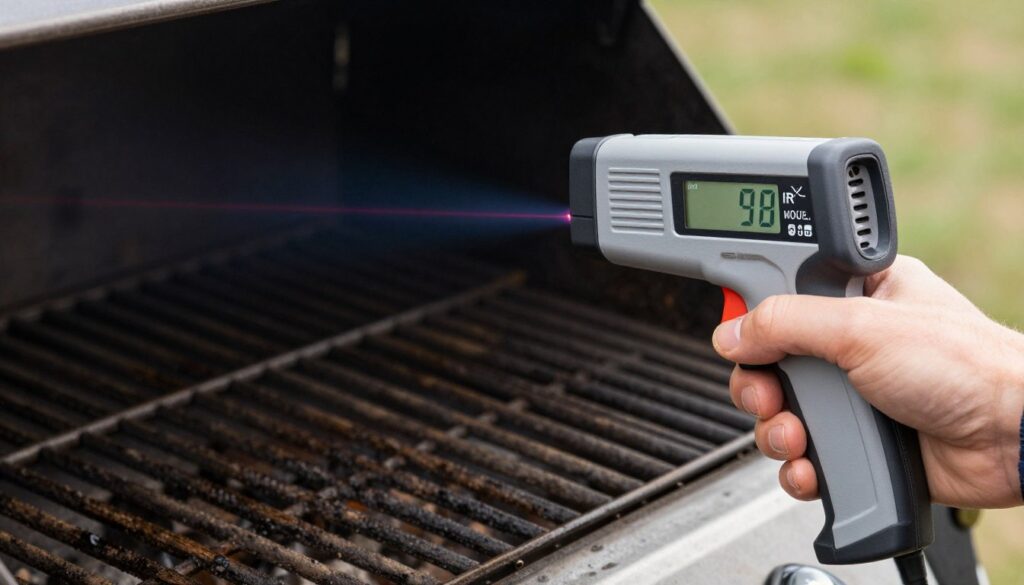
After testing a tremendous variety of applications, we have chosen the ThermoWorks Industrial IR Gun as our Editor choice for 2026. After extended testing, we came to this conclusion. We always make sure to test each thermometer based on accuracy, features, ease of use, and value for money.
With its powerful performance and affordability for home users, the Industrial IR Gun is balanced. Despite having a slightly higher overall score, the premium pricing of the ThermoWorks Hi-Temp IR with Circle Laser renders it unattainable for many. The Industrial IR Gun costs less and delivers nearly the same accuracy, plus most of the same features.
The model stands out due to its versatile characteristics. The fully adjustable emissivity settings make it suitable for just about any surface – shiny cookware, matte grill grates and more. The wide temperature range means it can be used for freezer checks and high-heat cooking. And, with multiple measurement modes, it gives valuable results for the casual or serious user.
The ThermoWorks Industrial IR Gun is ideal for most home cooks, DIYers and professionals. It offers the right performance for the price no feature has been cut or added making it perfect.
Ready to Experience Professional-Grade Temperature Measurement?
Get the ThermoWorks Industrial IR Gun today and take the guesswork out of temperature readings.
Frequently Asked Questions About Infrared Thermometers
Can infrared thermometers measure body temperature?
Standard infrared thermometers designed for cooking or industrial use are not calibrated for medical purposes and should not be used to measure body temperature. Medical-grade infrared thermometers are specifically designed and calibrated for human body temperature ranges and have undergone FDA testing and approval.
How do I know if my infrared thermometer is accurate?
You can verify your thermometer’s accuracy using an ice bath test. Fill a container with crushed ice and add just enough water to fill the spaces between ice pieces. Let it sit for 3 minutes, then aim your thermometer at the surface (not at the ice directly) from the recommended distance. It should read very close to 32°F (0°C). For higher temperatures, you can test it against a known reliable thermometer or a calibration device.
Can infrared thermometers measure through glass or water?
No, infrared thermometers cannot measure through transparent surfaces like glass, plastic, or water. They will measure the temperature of the transparent surface itself rather than what’s behind it. For example, if you point an infrared thermometer at a pot of water through a glass lid, you’ll get the temperature of the glass, not the water.
What’s the difference between an infrared thermometer and a meat thermometer?
Infrared thermometers measure surface temperature without contact, while meat thermometers use a probe to measure internal temperature. For cooking meat safely, you need a meat thermometer to verify that the internal temperature has reached safe levels. An infrared thermometer can only tell you the external temperature of the meat, which doesn’t indicate doneness.
What is emissivity and why does it matter?
Emissivity is a ratio that specifies how being emissive an object can be. Also, it leads to calculating how much energy is emitted by an object. As a matter of fact, emissivity has a value of 0 to 1. Most infra-red thermometers come preset to 0.95, which is suitable for the majority of organic materials, food and non-metallic surfaces. To measure shiny metals accurately, a thermometer with adjustable emissivity will be required.
Final Thoughts: Choosing the Right Infrared Thermometer
Infrared thermometers have transformed how we measure temperature in cooking, home maintenance, and professional applications. They provide instant, non-contact readings that make tasks safer and more precise. After thorough testing and evaluation, we’re confident that the five models featured in this guide represent the best options available in 2026.
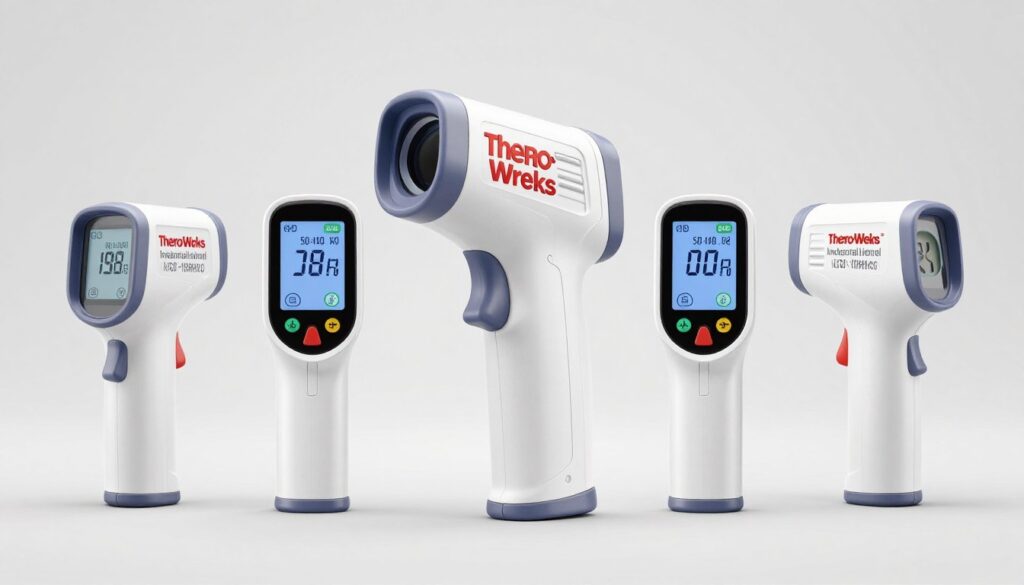
When selecting the right infrared thermometer for your needs, consider these final recommendations:
- For most users: The ThermoWorks Industrial IR Gun offers the best balance of performance, features, and value.
- For budget-conscious buyers: The Wintact Infrared Thermometer delivers surprising accuracy at an affordable price.
- For professionals and enthusiasts: The ThermoWorks Hi-Temp IR with Circle Laser provides unmatched precision and features.
- For durability in tough environments: The Klein Tools IR1 stands up to job site conditions.
- For simple, reliable operation: The Etekcity Lasergrip 800 offers straightforward functionality at a great price.
Whichever model you choose, an infrared thermometer will quickly become an indispensable tool in your kitchen, workshop, or professional toolkit. The ability to instantly check surface temperatures without contact not only improves safety but also enhances precision in cooking, home maintenance, and countless other applications.