People have gotten pickier about indoor air quality since the pandemic — and fair enough. Small air purifiers, the kind that actually fit on a nightstand or desk without commandeering the room, have become one of the smarter practical buys in recent years. The catch is that performance varies more than the marketing would have you believe. Before buying, you’ll want to understand CADR (Clean Air Delivery Rate), which tells you how fast a unit cleans the air in a room your size. Filter type, noise level, and running costs all matter too. Our team tested a wide range of models to help you figure out which ones are actually worth it in 2026.
Small Air Purifier Comparison Chart 2026
| Model | Dimensions | Coverage Area | Noise Level | Filter Type | Special Features | Price |
| Levoit Core 300S | 8.7″ x 8.7″ x 14.2″ | 219 sq. ft. | 24-50 dB | H13 HEPA, Activated Carbon | Smart app control, Auto mode | $149.99 |
| Coway Airmega AP-1512HH | 16.8″ x 9.6″ x 18.3″ | 361 sq. ft. | 24-53.8 dB | True HEPA, Activated Carbon | Air quality indicator, Eco mode | $173.25 |
| Blueair Blue Pure 411 | 8″ x 8″ x 16.7″ | 190 sq. ft. | 17-46 dB | HEPASilent, Activated Carbon | Washable pre-filter, One-button control | $119.99 |
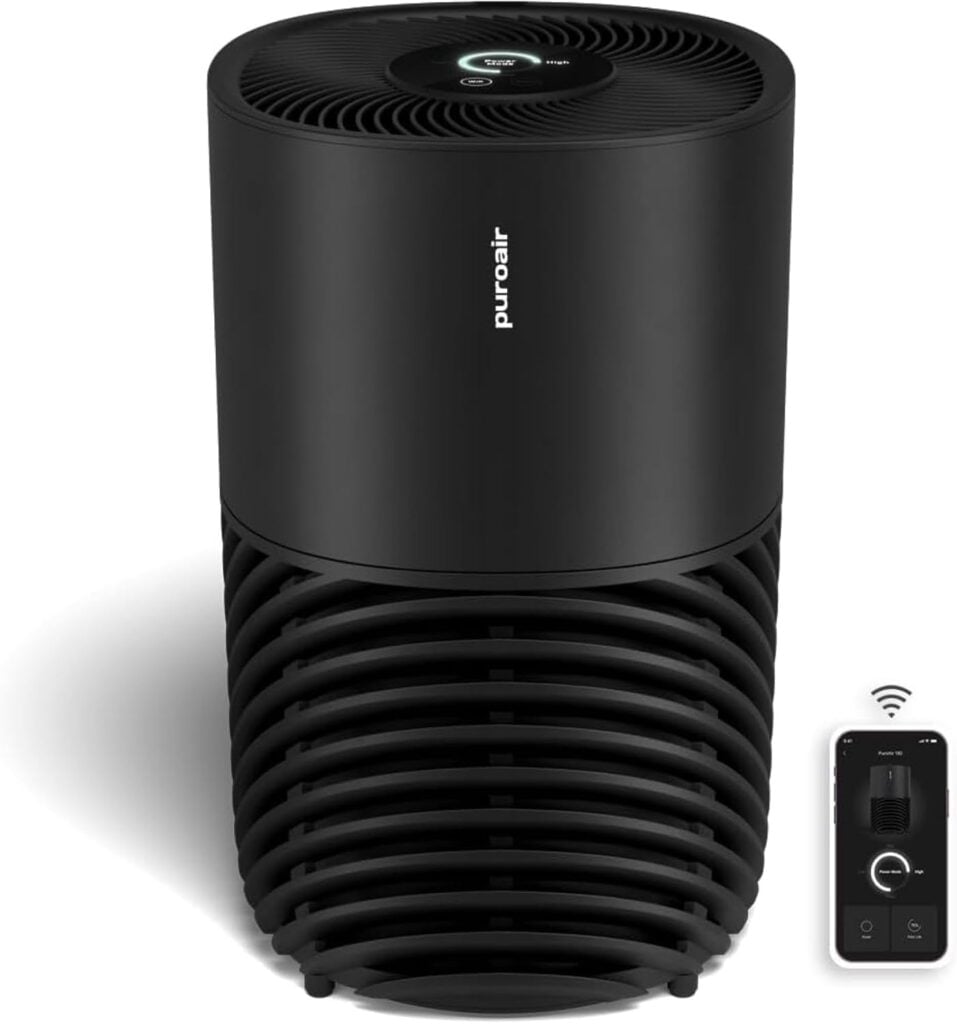
| PuroAir 240 | 8.5″ x 8.5″ x 14.5″ | 284 sq. ft. | 25-52 dB | H14 HEPA, Activated Carbon | Air quality sensor, Child lock | $159.99 |
| Winix A230 | 9.8″ x 9.8″ x 15″ | 230 sq. ft. | 27-48 dB | True HEPA, Activated Carbon | PlasmaWave technology, Sleep mode | $129.99 |
| Shark HP102 | 8.66″ x 8.66″ x 15.7″ | 200 sq. ft. | 22-49 dB | HEPA, Activated Carbon | Clean Sense IQ, Auto mode | $149.99 |
| Bissell air320 | 8.5″ x 8.5″ x 14.5″ | 195 sq. ft. | 26-51 dB | H13 HEPA, Activated Carbon | CirQulate System, Fabric pre-filter | $169.99 |
| Clorox Air Purifier | 9.1″ x 9.1″ x 15.7″ | 225 sq. ft. | 25-52 dB | True HEPA, Activated Carbon | Air quality sensor, Timer function | $84.99 |
| Blueair Blue Pure Mini Max | 7.9″ x 7.9″ x 13.2″ | 93 sq. ft. | 18-42 dB | HEPASilent, Activated Carbon | Washable fabric pre-filter, Ultra-quiet | $70.71 |
| Medify MA-15 | 8.9″ x 8.9″ x 12.2″ | 165 sq. ft. | 30-55 dB | H13 HEPA, Activated Carbon | Touch panel, 3 fan speeds | $99.99 |
Editor’s Choice: Best Small Air Purifier of 2026

Levoit Core 300S: Our Top Pick for 2026
We tested a lot of models before landing on the Levoit Core 300S as our top pick for 2026. It wasn’t really close. This unit does the three things that actually matter — filtration, noise, and smart controls — better than anything else at this price point, and it’s compact enough to sit on a nightstand without being obnoxious about it.
The H13 True HEPA filter catches 99.97% of airborne particles down to 0.3 microns — dust, pollen, pet dander, smoke. The activated carbon layer handles household odors, and the pre-filter catches the bigger stuff first so the main filter doesn’t wear out prematurely. With a CADR of 140 CFM, it turns over the air in a 219 sq ft room about five times an hour.
The VeSync app lets you control it remotely, check air quality readings, set schedules, and get a heads-up when the filter needs swapping. Auto mode adjusts fan speed based on what the sensors pick up; sleep mode drops the noise and dims the display so it’s not glowing at you all night. With filters lasting 6–8 months, the running costs are reasonable enough to make the higher upfront price forgivable.
Pros
- H13 True HEPA filtration captures 99.97% of particles
- Smart app control with air quality monitoring
- Ultra-quiet operation (24dB on sleep mode)
- Auto mode adjusts to air quality changes
- Energy efficient with low power consumption
Cons
- Higher price point than basic models
- Replacement filters cost more than competitors
- Limited coverage for larger rooms
Key Specifications:
- Coverage Area: 219 sq. ft. (5 ACH)
- CADR Rating: 140 CFM
- Noise Level: 24-50 dB
- Filter Type: H13 True HEPA, Activated Carbon, Pre-filter
- Power Consumption: 45W
- Dimensions: 8.7″ x 8.7″ x 14.2″
- Warranty: 2 years
1. Levoit Core 300S: Best Overall Small Air Purifier

The Levoit Core 300S is still the one to beat in 2026. It’s Wi-Fi connected, genuinely quiet, and handles rooms up to 219 square feet with five air changes per hour — solid numbers for a unit this size.
Three-stage filtration starts with a pre-filter for hair and large debris, moves to an H13 True HEPA that captures 99.97% of particles down to 0.3 microns, and finishes with an activated carbon layer for odors, smoke, and VOCs. The VeSync app handles remote control, real-time air quality monitoring, scheduling, and filter replacement reminders — the app is actually polished, which can’t be said for all smart purifier software.
Pros
- Powerful H13 HEPA filtration in a compact design
- Smart app control with air quality monitoring
- Whisper-quiet sleep mode (24dB)
- Auto mode adjusts to air quality changes
- Multiple filter options for specific needs (pet allergies, toxins, smoke)
Cons
- Higher price than non-smart models
- Replacement filters are somewhat expensive
- Limited coverage for larger rooms
Key Specifications:
- Coverage Area: 219 sq. ft. (5 ACH)
- CADR Rating: 140 CFM
- Noise Level: 24-50 dB
- Filter Type: H13 True HEPA, Activated Carbon, Pre-filter
- Power Consumption: 45W
- Dimensions: 8.7″ x 8.7″ x 14.2″
- Warranty: 2 years
2. Coway Airmega AP-1512HH: Best Premium Small Air Purifier

The Coway Airmega AP-1512HH — most people just call it the “Mighty” — has been around long enough to prove itself. It’s a bit bigger than the other units here, but the performance gap justifies it, which is why it’s our top premium pick for 2026.
Four-stage filtration — pre-filter, deodorization filter, True HEPA, and an optional ionizer — pulls in 99.97% of particles down to 0.3 microns. The CADR numbers are genuinely strong: 233 for dust, 246 for pollen, 240 for smoke, enough to clean rooms up to 361 sq ft. The built-in air quality indicator gives real-time feedback, and Eco mode cuts the fan entirely when no pollution is detected for 30 minutes — a small thing that adds up on your electricity bill.
Pros
- Exceptional filtration performance with high CADR ratings
- Energy-efficient Eco mode
- Real-time air quality monitoring with indicator light
- Extremely durable with proven long-term reliability
- Filter replacement indicator
Cons
- Slightly larger footprint than other “small” purifiers
- No smart features or app control
- Ionizer function may produce trace amounts of ozone
Key Specifications:
- Coverage Area: 361 sq. ft. (4 ACH)
- CADR Rating: 233-246 CFM
- Noise Level: 24-53.8 dB
- Filter Type: True HEPA, Activated Carbon, Pre-filter
- Power Consumption: 77W
- Dimensions: 16.8″ x 9.6″ x 18.3″
- Warranty: 3 years
3. Blueair Blue Pure 411: Best Budget Small Air Purifier

The Blueair Blue Pure 411 is the easy recommendation for anyone who wants solid air purification without spending much. Swedish-designed, compact, and quiet — it fits a small bedroom, home office corner, or dorm room without complaint.
Blueair’s HEPASilent technology captures 99% of airborne particles down to 0.1 microns, including dust, pollen, pet dander, and mold spores. The carbon filter handles light odors, VOCs, and smoke. One thing that separates it from most budget options: the fabric pre-filter is washable and comes in five colors if matching your decor matters to you. Energy draw runs as low as 1.5W on the lowest setting, so it’s cheap to leave running around the clock.
Pros
- Extremely affordable price point
- Ultra-compact design fits anywhere
- Very energy efficient (1.5-10W)
- Whisper-quiet operation (17dB on low)
- Customizable colored pre-filters
Cons
- Limited coverage area (190 sq. ft.)
- No smart features or display
- Single-button control lacks advanced settings
Key Specifications:
- Coverage Area: 190 sq. ft. (4.8 ACH)
- CADR Rating: 105 CFM
- Noise Level: 17-46 dB
- Filter Type: HEPASilent, Activated Carbon, Fabric pre-filter
- Power Consumption: 1.5-10W
- Dimensions: 8″ x 8″ x 16.7″
- Warranty: 1 year
4. PuroAir 240: Best for Allergies and Pollen

Allergy sufferers should look at the PuroAir 240 before settling on anything else. It uses an H14 HEPA filter — one grade above the H13 you’ll find in most competitors — which pushes capture efficiency from 99.97% to 99.995%. That gap is small on paper and meaningful in practice if you’re reactive to fine particles.
The numbers that matter here are the CADR ratings for pollen (204) and dust (181), both strong for a unit this size. The three-stage filtration — pre-filter screen, H14 HEPA, activated carbon — covers particles and gases. The built-in air quality sensor monitors particulate levels continuously, adjusting fan speed automatically in Auto mode and displaying current air quality through a color indicator.
Pros
- Medical-grade H14 HEPA filtration (99.995% efficiency)
- Exceptional pollen and dust CADR ratings
- Real-time air quality monitoring
- Auto mode adjusts to detected pollutants
- Child lock feature
Cons
- No smart app connectivity
- Filter replacements are somewhat expensive
- Can be loud on highest setting
Key Specifications:
- Coverage Area: 284 sq. ft. (5 ACH)
- CADR Rating: 181-204 CFM
- Noise Level: 25-52 dB
- Filter Type: H14 HEPA, Activated Carbon, Pre-filter
- Power Consumption: 40W
- Dimensions: 8.5″ x 8.5″ x 14.5″
- Warranty: 2 years
5. Winix A230: Best for Bedrooms

The Winix A230 was built with bedrooms in mind, and the design decisions reflect that. Sleep Mode drops fan noise to 27dB and shuts off all indicator lights — the unit effectively disappears at night. If you’re a light sleeper, this matters more than almost any other spec on the list.
Filtration is a standard three-stage setup: pre-filter, True HEPA, carbon filter. Coverage tops out at 230 sq ft, which is fine for most bedrooms but tight in larger master suites. Winix’s PlasmaWave technology works on odors and allergens at a molecular level without generating ozone — a useful extra on top of the mechanical filtration, not a replacement for it.
Pros
- Ultra-quiet Sleep Mode (27dB)
- Auto-dimming lights for nighttime use
- PlasmaWave technology for enhanced purification
- Compact design fits on nightstands
- Energy efficient operation
Cons
- No smart features or app control
- Limited coverage for larger bedrooms
- PlasmaWave cannot be disabled independently
Key Specifications:
- Coverage Area: 230 sq. ft. (4 ACH)
- CADR Rating: 130 CFM
- Noise Level: 27-48 dB
- Filter Type: True HEPA, Activated Carbon, Pre-filter
- Power Consumption: 35W
- Dimensions: 9.8″ x 9.8″ x 15″
- Warranty: 2 years
6. Shark HP102: Best Smart Small Air Purifier

The Shark HP102’s main pitch is its Clean Sense IQ system, which monitors air quality continuously and adjusts purification output on its own. In practice it’s genuinely responsive — the unit ramps up fast when something burns in another room and backs off once the air clears. That kind of reactivity is harder to find at this price point than it should be.
The HEPA filter has Microban antimicrobial treatment built in, which slows bacterial growth on the filter between replacements — a practical feature, not just a marketing checkbox. The digital display shows current air quality and filter life. Auto mode handles the daily decision-making. Sleep mode drops the noise and dims the display for nighttime use. Worth noting: despite the “smart” label, there’s no app — the intelligence is on-device only.
Pros
- Advanced Clean Sense IQ air monitoring
- Antimicrobial-treated HEPA filter
- Real-time air quality feedback
- Intelligent Auto mode
- Quiet operation even at higher settings
Cons
- Higher price point than basic models
- No app connectivity despite smart features
- Replacement filters are expensive
Key Specifications:
- Coverage Area: 200 sq. ft. (4 ACH)
- CADR Rating: 125 CFM
- Noise Level: 22-49 dB
- Filter Type: True HEPA with Microban, Activated Carbon
- Power Consumption: 38W
- Dimensions: 8.66″ x 8.66″ x 15.7″
- Warranty: 1 year
7. Bissell air320: Best Designer Small Air Purifier

Most air purifiers look like air purifiers. The Bissell air320 doesn’t — wooden legs, fabric pre-filter in your choice of colors, and a profile that blends into a living room instead of announcing itself. Whether that aesthetic is worth paying a premium over functionally similar competitors is a personal call, but the option exists.
The filtration holds up regardless of the looks: an H13 HEPA filter captures 99.97% of particles down to 0.3 microns, and the activated carbon layer handles odors. The CirQulate System monitors indoor air quality and gives feedback via a color-coded display. A simple dial controls the rest — no touchscreen, no app, no fuss.
Pros
- Stylish furniture-like design with wooden legs
- Customizable fabric pre-filter in multiple colors
- H13 HEPA filtration for efficient air cleaning
- CirQulate air quality monitoring system
- Intuitive dial control
Cons
- Higher price point for its coverage area
- No smart features or app control
- Slightly larger footprint than other “small” models
Key Specifications:
- Coverage Area: 195 sq. ft. (4.8 ACH)
- CADR Rating: 118 CFM
- Noise Level: 26-51 dB
- Filter Type: H13 HEPA, Activated Carbon, Fabric pre-filter
- Power Consumption: 45W
- Dimensions: 8.5″ x 8.5″ x 14.5″
- Warranty: 2 years
8. Clorox Air Purifier: Best Value Small Air Purifier

The Clorox Air Purifier is the clearest value play on this list. At $84.99, it includes an air quality sensor and Auto mode — features you’d typically pay $40–60 more to get elsewhere. It’s not perfect, but the performance-to-price ratio is hard to argue with.
Three-stage filtration — pre-filter, True HEPA, activated carbon — captures 99.97% of airborne particles down to 0.3 microns. The color-coded indicator and digital display show current air quality in real time. Auto mode adjusts fan speed based on what the sensor picks up. On top of that: a timer (1, 4, or 8 hours), four fan speeds, sleep mode, and child lock. The main tradeoff is filter life, which is shorter than on premium models.
Pros
- Excellent price-to-performance ratio
- Real-time air quality monitoring
- Auto mode adjusts to air quality changes
- Timer function for scheduled operation
- Child lock for safety
Cons
- Filter life shorter than premium models
- No app connectivity
- Louder on highest setting
Key Specifications:
- Coverage Area: 225 sq. ft. (5 ACH)
- CADR Rating: ~142 CFM
- Noise Level: 25-52 dB
- Filter Type: True HEPA, Activated Carbon, Pre-filter
- Power Consumption: 40W
- Dimensions: 9.1″ x 9.1″ x 15.7″
- Warranty: 1 year
9. Blueair Blue Pure Mini Max: Best Ultra-Compact Air Purifier
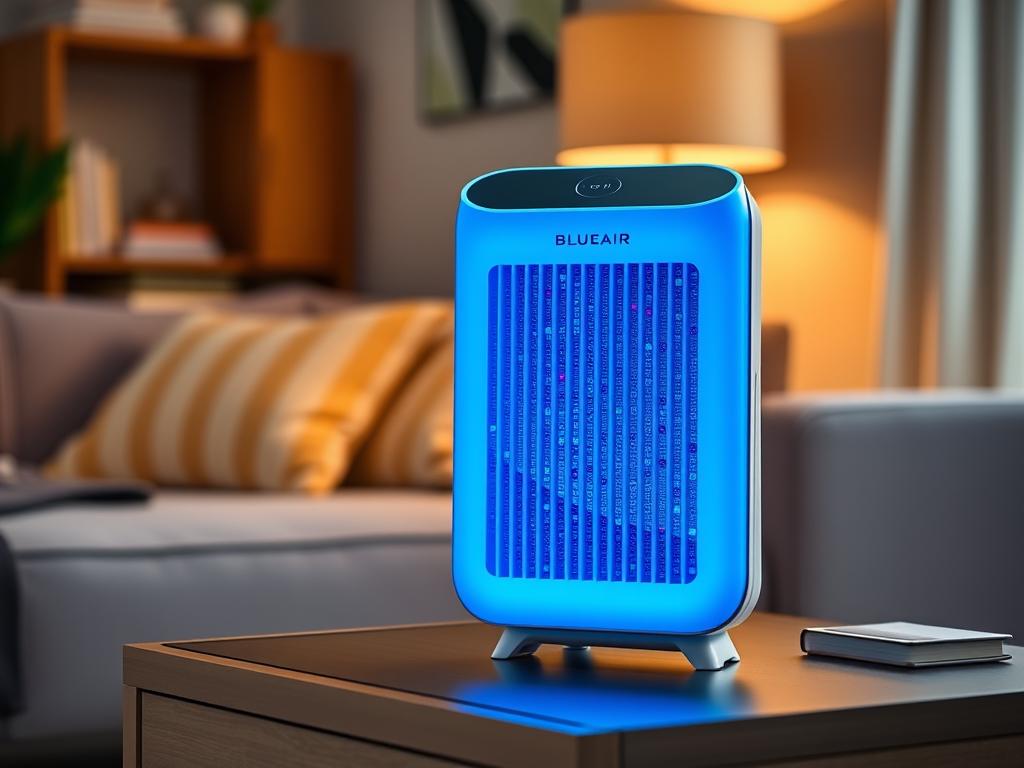
If you need air filtration in a very small space and don’t want a unit that dominates the room, the Blueair Blue Pure Mini Max is worth considering. At 7.9″ x 7.9″ x 13.2″, it’s sized for a desk or nightstand — not a room purifier, a personal one. Coverage tops out at 93 sq ft, so go in with realistic expectations.
HEPASilent technology captures 99% of particles down to 0.1 microns. The washable fabric pre-filter catches larger particles and comes in a few color options. Noise starts at 18dB on low — genuinely hard to notice. Three fan modes, one button. The energy draw is 2–10W, so running it around the clock won’t show up on your electricity bill.
Pros
- Ultra-compact size fits anywhere
- Extremely quiet operation (18-42 dB)
- Very energy efficient
- Washable, colorful fabric pre-filter
- Simple one-button operation
Cons
- Limited coverage area (93 sq. ft.)
- No air quality sensor or display
- Basic features only
Key Specifications:
- Coverage Area: 93 sq. ft. (5 ACH)
- CADR Rating: 60 CFM
- Noise Level: 18-42 dB
- Filter Type: HEPASilent, Activated Carbon, Fabric pre-filter
- Power Consumption: 2-10W
- Dimensions: 7.9″ x 7.9″ x 13.2″
- Warranty: 1 year
10. Medify MA-15: Best for Office Spaces

The Medify MA-15 is sized for a desk. At 8.9″ x 8.9″ x 12.2″, it has one of the smallest footprints on this list and a clean, professional look that doesn’t feel out of place in an office or cubicle.
H13 HEPA filtration captures 99.9% of particles down to 0.1 microns — including bacteria and viruses, which is worth noting in shared office spaces. The touch panel is clean and direct: three fan speeds, a timer, and a child lock. Coverage tops out at 165 sq ft, so this is a personal workspace purifier, not a conference room solution. One standout on the specs sheet: Medify offers a lifetime warranty, which no other unit on this list can match.
Pros
- Medical-grade H13 HEPA filtration
- Professional, office-friendly design
- Compact footprint fits on desks
- Touch panel with timer function
- Quiet operation for office environments
Cons
- No air quality sensor
- Limited coverage area
- No smart features or app control
Key Specifications:
- Coverage Area: 165 sq. ft. (4 ACH)
- CADR Rating: 100 CFM
- Noise Level: 30-55 dB
- Filter Type: H13 HEPA, Activated Carbon
- Power Consumption: 25W
- Dimensions: 8.9″ x 8.9″ x 12.2″
- Warranty: Lifetime
Small Air Purifier Buying Guide: What to look for

There’s a short list of things that actually determine whether a small air purifier is worth buying. Everything else is noise.
Room size and CADR rating
CADR (Clean Air Delivery Rate) measures how fast a purifier removes dust, pollen, and smoke from a given volume of air. For real results, aim for a unit that delivers at least 4–5 air changes per hour in your room. A rough formula: divide your room’s square footage by 1.55 to get the minimum CADR you need.
Filtration technology
Most quality purifiers use a layered approach:
- HEPA filters: True HEPA or H13 filters capture 99.97% of particles as small as 0.3 microns, including dust, pollen, pet dander, and most bacteria.
- Activated carbon filters: These absorb odors, smoke, VOCs, and gaseous pollutants that HEPA filters can’t touch.
- Pre-filters: Capture larger particles like hair and dust, extending the life of the main HEPA filter.
Noise levels
Small air purifiers range from barely audible (below 30dB) to noticeably loud (55dB+) on their highest settings. For bedrooms or offices, look for models under 50dB on medium speed and check whether there’s a dedicated sleep mode if nighttime use matters to you.
Energy efficiency
Air purifiers run all day. That adds up. Look for ENERGY STAR certified models and check the wattage — the difference between a 10W unit and a 45W unit is roughly $30–35 per year depending on your electricity rates.
Smart features
Worth having: air quality sensors that trigger Auto mode, filter replacement indicators, and app control for scheduling. Nice-to-have: timers and sleep modes. Worth being skeptical of: ionizers and UV features with limited independent evidence behind them.
- Air quality sensors that monitor pollution levels
- Auto modes that adjust fan speed based on air quality
- App connectivity for remote control and monitoring
- Filter replacement indicators
- Programmable timers
Filter replacement costs
Replacement filters typically run $20–$80 depending on the model and need changing every 6–12 months. Some brands are more reasonable here than others — factor this into the total cost before buying, not after.
Our Testing Methodology

Our evaluation process combines hands-on testing with extended research. Here’s exactly how we assessed each unit:
Performance testing
We tested each air purifier in controlled environments using standardized protocols:
- Particle removal efficiency using professional-grade particle counters
- Testing with common pollutants including smoke, dust, and allergens
- Air cleaning rate measured across multiple room sizes
- Verification of manufacturer CADR claims
- Long-term performance evaluation over extended use periods
Noise level assessment
We measured sound output at all fan speeds using calibrated decibel meters, tested from multiple distances to reflect real-world use. Sleep modes and nighttime operation got extra attention.
Energy consumption analysis
Using power meters, we measured actual electricity usage across all settings and calculated annual operating costs based on average electricity rates.
User experience evaluation
Our team assessed the practical side of each unit:
- Ease of setup and filter installation
- Intuitiveness of controls and displays
- Effectiveness of smart features and app interfaces
- Filter replacement process and availability
- Build quality and durability
Consumer feedback analysis
We reviewed thousands of verified customer reviews across multiple platforms, with particular attention to long-term reliability reports and recurring complaints.
Expert consultation
Our findings were reviewed by indoor air quality specialists and HVAC professionals to make sure our recommendations align with industry best practices.
Frequently Asked Questions About Small Air Purifiers
How often should I replace the filters in my small air purifier?
It depends on the model and how you use it. Generally: clean pre-filters every 2–4 weeks, replace HEPA filters every 6–12 months, and swap activated carbon filters every 3–6 months. Most modern purifiers include a filter indicator that tracks actual usage and tells you when replacement is due. Homes with pets, smokers, or high dust levels will burn through filters faster than average.
Can small air purifiers effectively remove viruses and bacteria?
Small air purifiers with True HEPA or H13 filters can capture most airborne bacteria and many viruses. HEPA filters trap particles as small as 0.3 microns with 99.97% efficiency and are actually more effective at capturing even smaller particles through diffusion. Air purifiers can reduce airborne pathogens meaningfully, but they’re one layer of protection — not a standalone solution for indoor hygiene.
Where is the best place to position a small air purifier?
Somewhere with decent airflow, at least 6–12 inches from walls or furniture. Avoid corners and spots behind obstacles. In bedrooms, 3–6 feet from the bed tends to work well. If you’re targeting a specific pollutant source, put the unit near it — close to the kitchen for cooking odors, near a window during pollen season.
Do I need to run my air purifier all the time?
For the best results, yes. Most small air purifiers are designed for continuous operation, and Auto mode keeps energy use low when the air is already clean. If running it 24/7 isn’t practical, prioritize the times you’re actually in the room or when pollutant levels are highest — during cooking, cleaning, or high-pollen days.
Are small air purifiers effective for pet allergies?
Yes — HEPA filters are well suited for capturing pet dander. Look for models with specialized pet filters that include extra activated carbon layers for odors too. Size up slightly from your actual room square footage, and expect to replace filters more often than the standard timeline. Pet hair and dander load filters faster than average indoor use.
Final thoughts: choosing the right small air purifier

After testing these side by side, the right pick really does come down to what you’re solving for. The Levoit Core 300S is the best all-around unit for most people — good filtration, app control that actually works, quiet enough to run through the night, and sized right for bedrooms and offices. For everyone else, the shortlist looks like this:
Best for specific needs:
- For allergy sufferers: The PuroAir 240, with its H14 HEPA filter and strong pollen and dust CADR numbers.
- For light sleepers: The Winix A230 — quieter and darker at night than anything else on this list.
- For tight budgets: The Blueair Blue Pure 411 delivers solid performance at a lower price with lower ongoing filter costs.
- For tech-leaning buyers: The Shark HP102 — the Clean Sense IQ is the most responsive Auto mode we tested.
- For design-conscious homes: The Bissell air320, if aesthetics matter enough to justify the price premium.
- For tiny spaces: The Blueair Blue Pure Mini Max, when a desk or nightstand is all you’ve got to work with.
Match the unit to your room size and your actual priorities, keep the filter on schedule, and position it where airflow is reasonable. Do those three things and any of these will give you cleaner air for years.
Whether you’re dealing with allergies, pet odors, smoke, or just general stuffiness, a well-chosen small air purifier handles it without taking over the room. That’s the whole point.
Get Garage Tested Deals & Offers
Garage Tested will only send the latest deals and will never share your email with 3rd parties. No more than 1 email/month.
Garage Tested air purifier rankings are based on our internal yee-haw garage testing, actual customer feedback, and the analysis by our editorial team. We have done your homework on these products.